

Template-based websites are fast to launch, but they come with a ceiling: limited flexibility, generic design that doesn’t differentiate your brand, and structural constraints that make it harder to scale as your business grows. A custom-designed website removes that ceiling — built specifically around how your business actually operates, sells, and grows.
At Crossway Consulting, we design and build custom websites on CMS platforms that make it easy to manage, scale, and update your digital presence — without requiring technical expertise from your team, and without the visual and structural limitations of an off-the-shelf template.
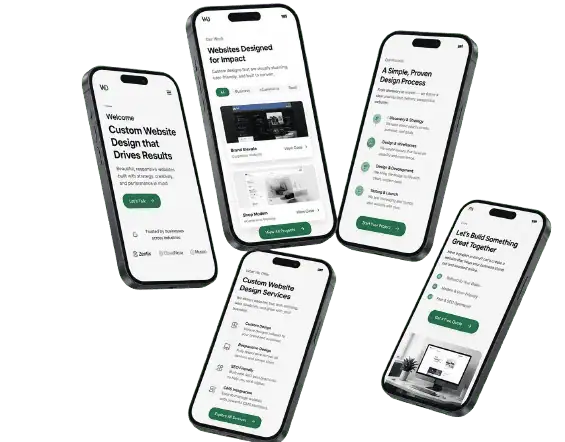
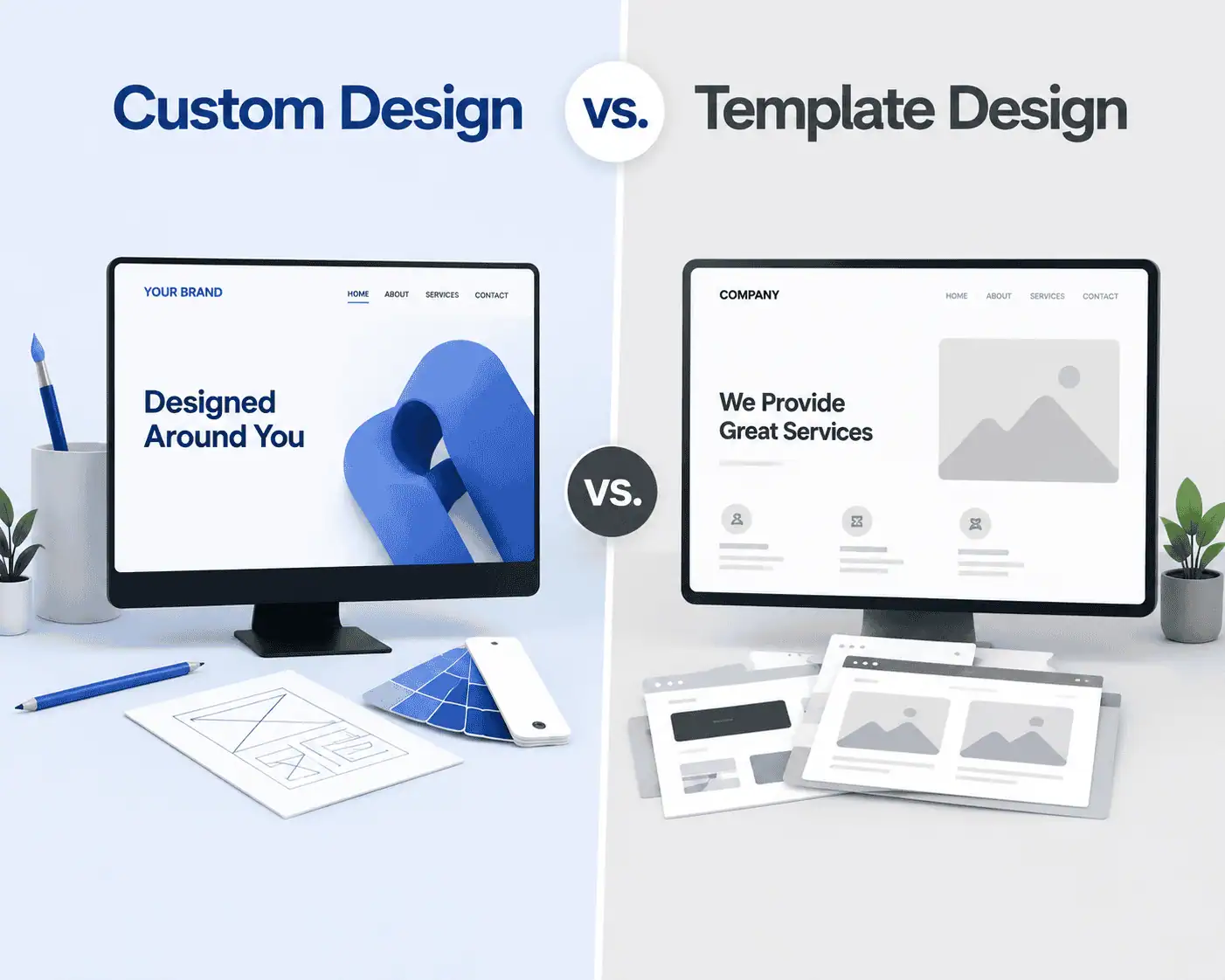
A template starts with a pre-built layout and limits you to its structure, styling options, and often its underlying page-builder constraints. Custom design starts from your business needs — audience, offerings, growth plans — and builds the site’s structure, layout, and functionality around them. Templates are usually faster and cheaper to launch; custom design typically costs more upfront but removes the limitations you’d otherwise hit as your site grows or your needs change. Neither approach is universally “better” — the right choice depends on your business stage and goals.
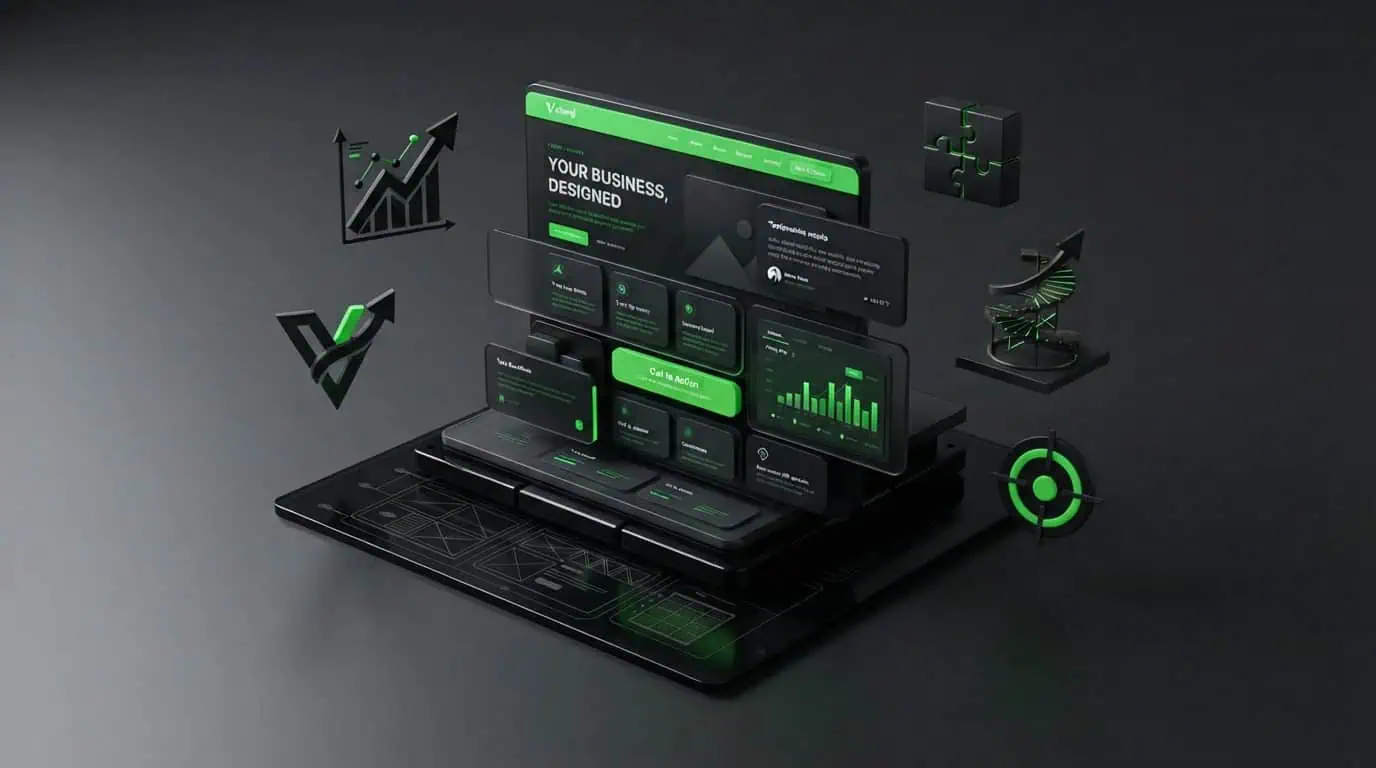
Before any design work starts, we look at your business goals, target audience, and competitive landscape, so the design decisions we make are tied to outcomes — not just aesthetics chosen because they look appealing in isolation.
We map site architecture, content hierarchy, and user flow first. A site that looks good but is hard to navigate or slow to load doesn't serve your business, no matter how polished the visual design is.
Every custom design balances brand identity with usability — clear navigation, obvious calls to action, and layouts that guide visitors toward the action you want them to take.
Custom design doesn't mean locking your team out of their own site. We build custom designs on CMS frameworks so your team can update content, publish pages, and manage the site without needing a developer for routine changes.
Before launch, we test the design across devices, screen sizes, and browsers, and review it against your original goals — not just visually, but functionally, checking that forms, navigation, and calls to action all work as intended.
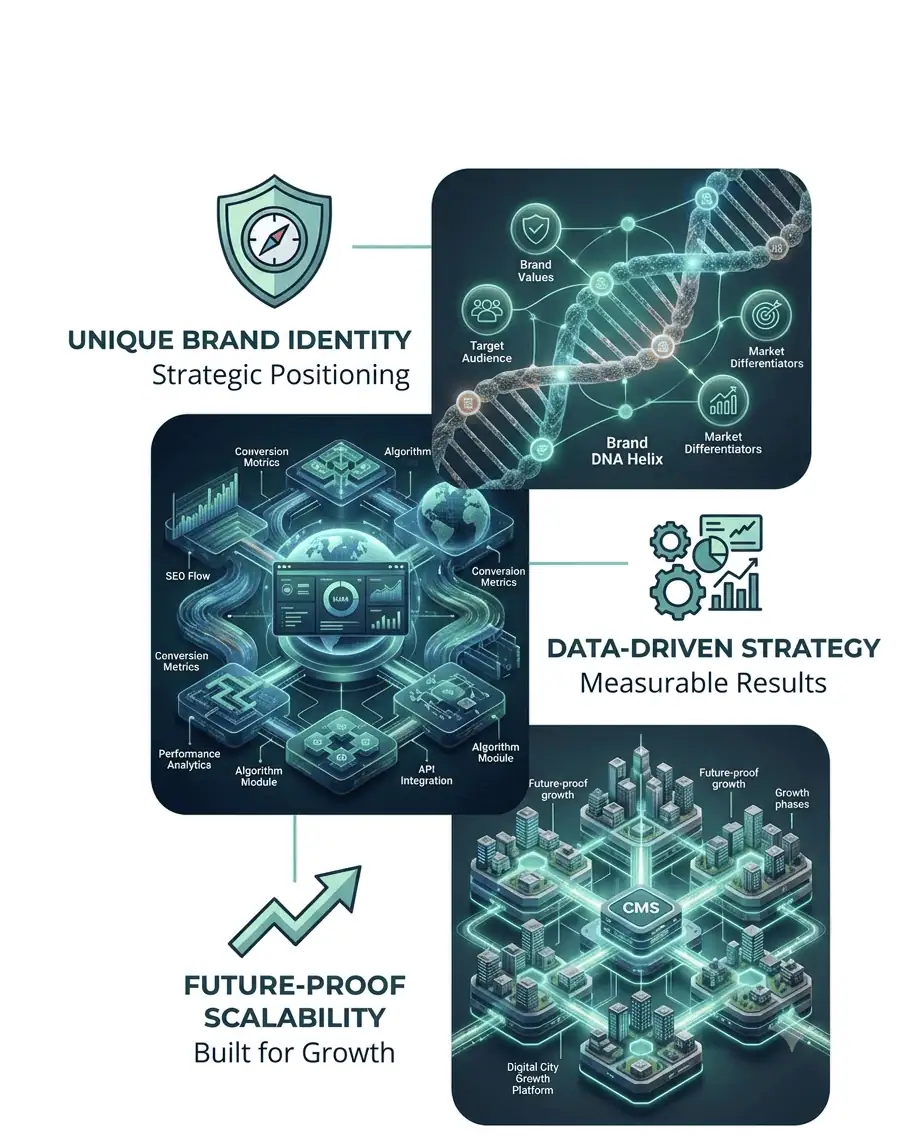
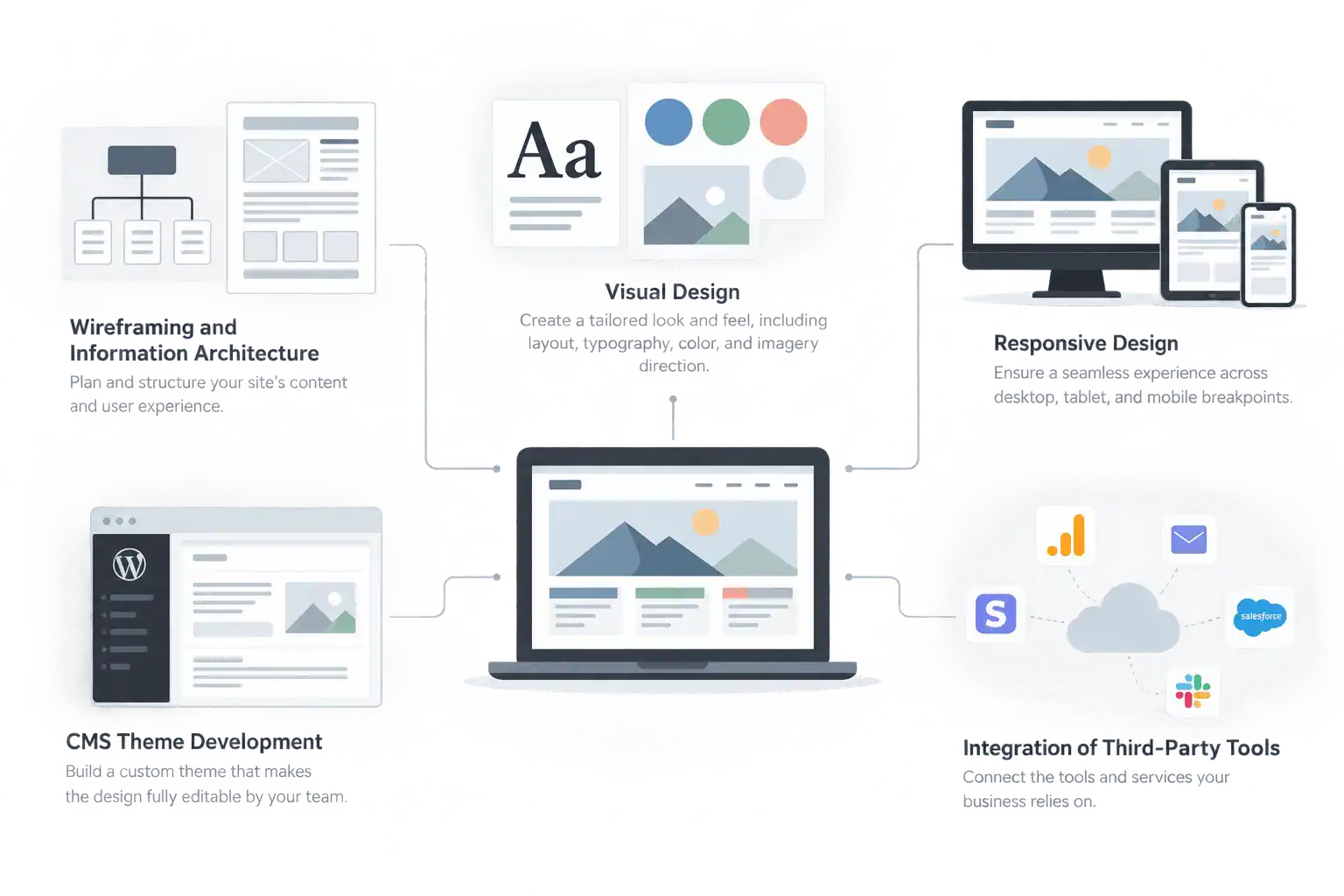
A custom design engagement typically covers several distinct components: wireframing and information architecture, visual design (layout, typography, color, imagery direction), responsive design across desktop, tablet, and mobile breakpoints, CMS theme development to make the design fully editable by your team, and integration of any third-party tools your business relies on. We scope each of these individually based on your project, rather than bundling a fixed set of deliverables that may not match what your business actually needs.
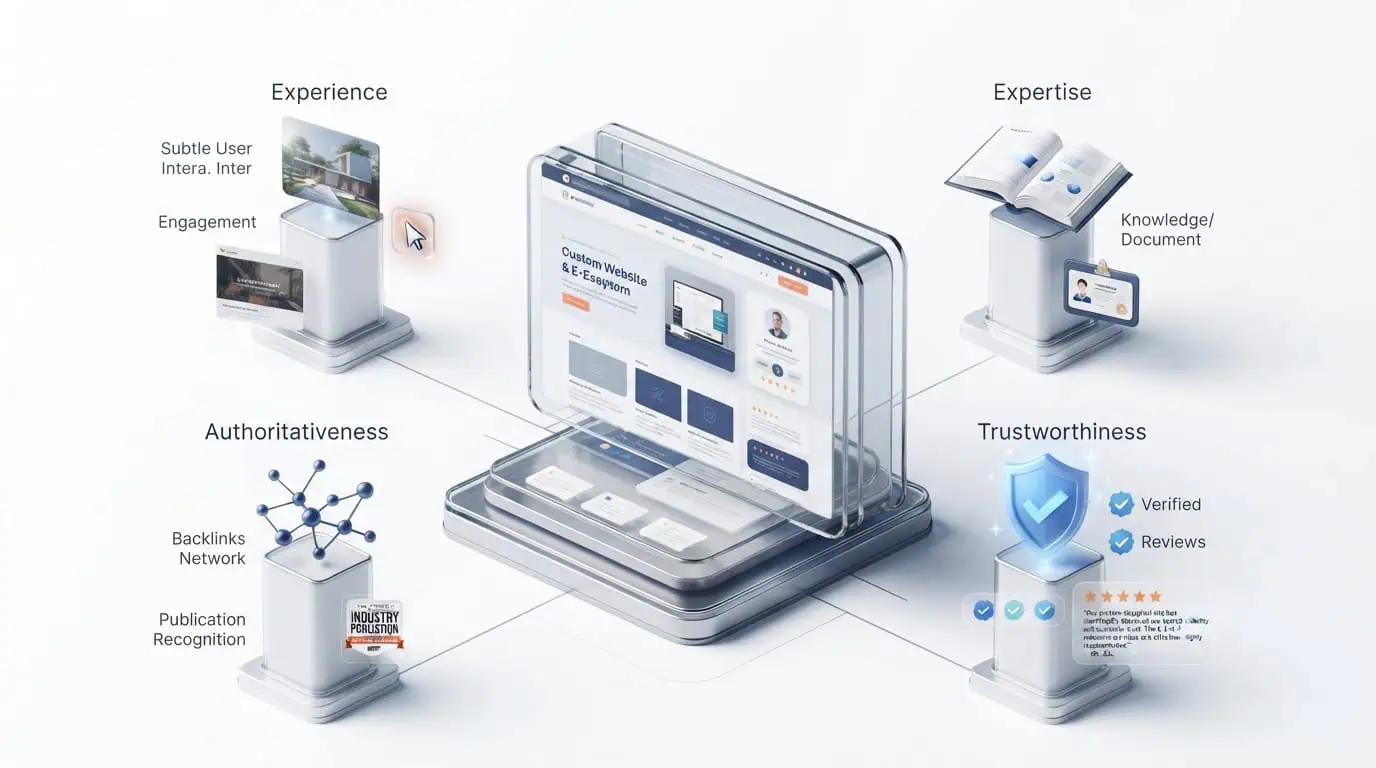
Google’s ranking systems increasingly reward sites that demonstrate genuine experience, expertise, authoritativeness, and trustworthiness (E-E-A-T). A generic template, used by thousands of other sites with minimal customization, does little to signal any of those qualities. Custom design gives you control over information architecture, internal linking, structured data, and content presentation — all factors that support both user experience and how clearly search engines can understand what your site and business actually offer.

Healthcare
Our solutions enhance healthcare by streamlining processes and improving patient care.

Automotive
Improve your vehicle management and enhance customer satisfaction with custom solutions.

Finance
Get scalable solutions that improve the efficiency and security of your financial services.

Education
Revolutionize ed-tech with solutions that boost student engagement and simplify learning.

Real Estate
Our real estate solutions streamline operations, simplifying property management and sales.

Hospitality
Get user-friendly solutions that enhance guest experiences and boost customer satisfaction.
A template starts with a pre-built layout and limits you to its structure, styling options, and often its underlying page-builder constraints. Custom design starts from your business needs and builds the site's structure, layout, and functionality around them — which typically costs more upfront but removes the limitations you'd otherwise hit as your site grows or your needs change.
Generally, yes — custom design involves more upfront planning and design work than configuring a pre-built template. The tradeoff is a site built specifically for your business rather than adapted to fit someone else's structure. We provide a project timeline once we've scoped your specific requirements.
If maximum performance, deep device integration, and platform-specific features are critical, go native. If you need to launch on iOS and Android simultaneously within a limited budget, cross-platform (Flutter or React Native) is often the smarter choice. We give you an honest recommendation based on your goals, not on what's easier for us to build.
It depends on your growth plans and competitive landscape. If a template currently meets your needs and you don't anticipate outgrowing it soon, a template-based site may be the more cost-effective choice. If your brand needs to stand out in a competitive market, or you're already anticipating growth that a template can't support, custom design is typically the better long-term investment. We'll give you an honest assessment rather than defaulting to the larger project.
If your current site's core structure works but the design and experience feel outdated, a redesign may be sufficient — covered in detail on our Website Redesign Services page. If you need a fundamentally different structure, custom design from the ground up is usually the better path.
Yes. Custom design and e-commerce functionality aren't mutually exclusive — we regularly build custom-designed storefronts on WooCommerce, Shopify, and Magento. If your primary need is an online store, our E-Commerce CMS Development page covers platform-specific considerations in more depth.