User expectations are ever-changing, as seen in how users are no longer content with functional websites. They desire digital experiences that feel natural, stunning, and intuitive, and that’s where the best UX/UI design comes into play.
Moreover, AI in UX/UI is driving an impetus towards personalisation and accessibility like never before. Businesses have no choice but to adapt to future-ready UI UX strategies if they are to maintain a thriving web presence. In this blog, we will talk about the promising UI/UX design trends for web developers to help them create user-centric designs that are in line with Modern UI/UX trends.
15 Future UI UX Design Trends That Will Work Tremendously Well in 2026
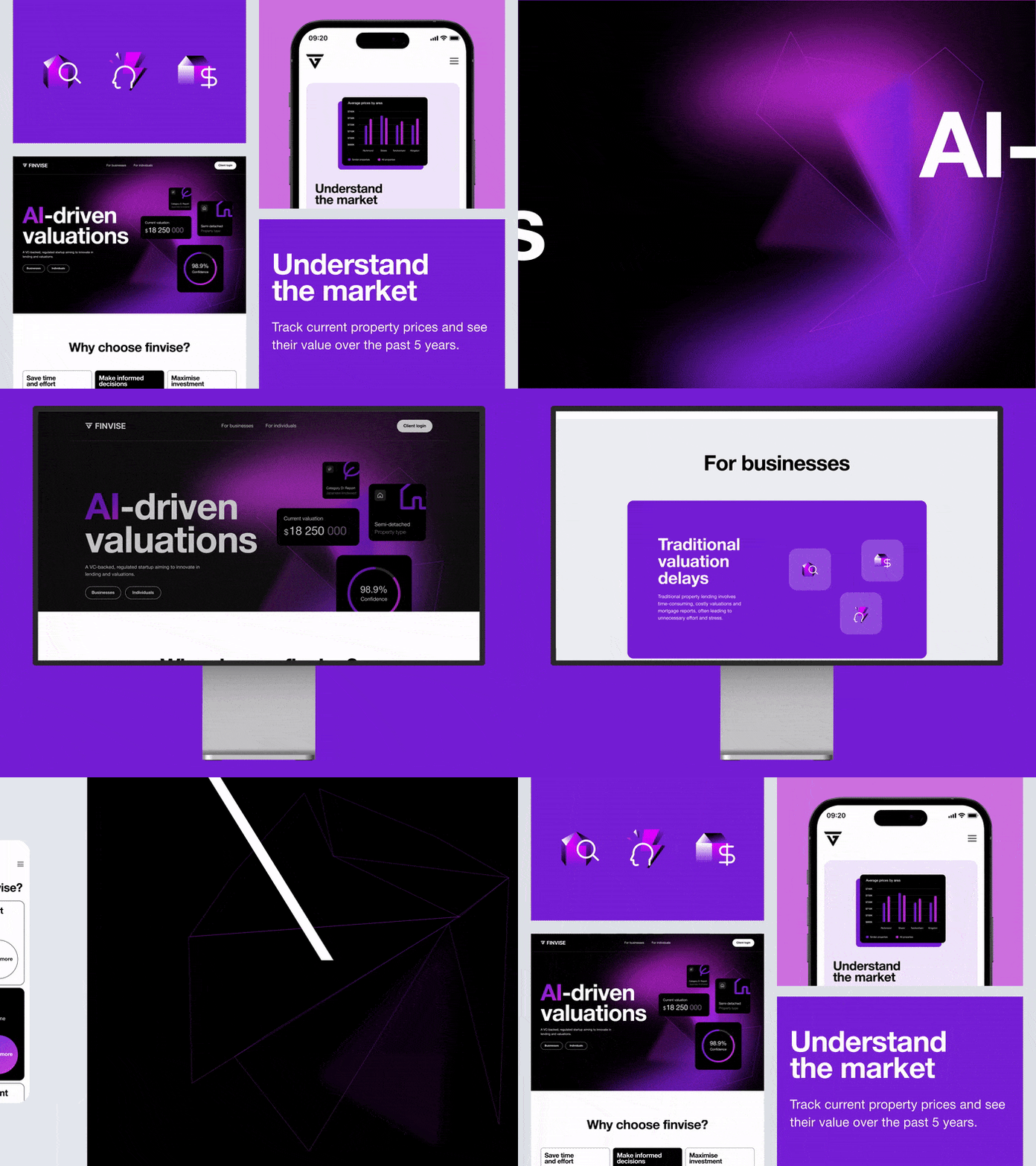
1. Bold Contrast UI Design
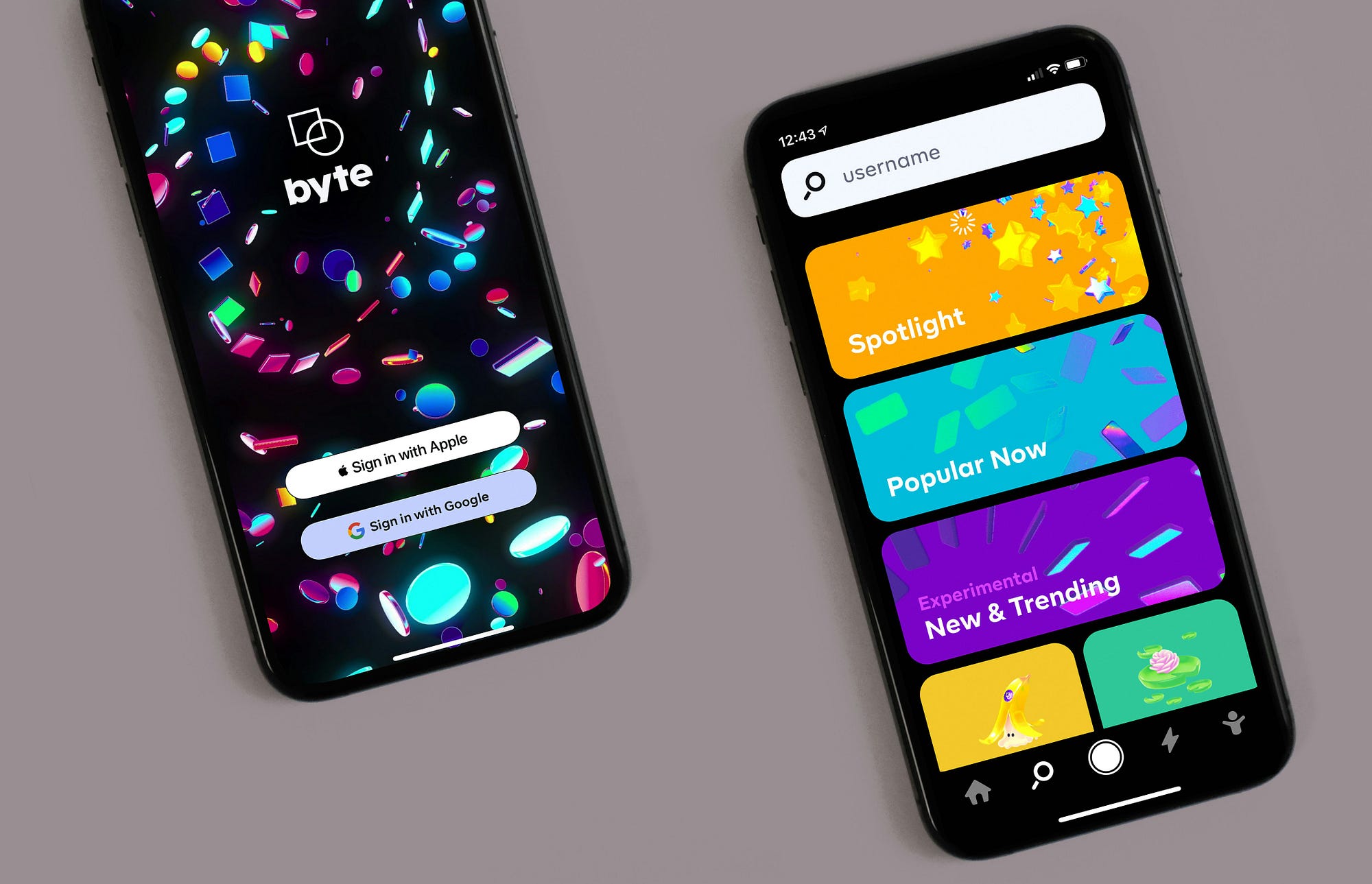
This trend represents a decisive break from the muted, “safe” aesthetics that dominated the 2010s. Today’s users, especially younger demographics, crave interfaces that feel alive, distinctive, and unapologetically bold. In 2025, safe colour palettes are out—bold, high-contrast combinations are commanding attention across digital interfaces.
Bold colors like neon and 3D hues are making modern interfaces more dynamic and appealing, with vibrant shades helping apps and websites stand out while enhancing emotional engagement and improving accessibility through high-contrast designs.
Think dark blues paired with electric orange, deep purples clashing with neon yellow—these high-tension pairings create visual hierarchies that guide users naturally while communicating energy, confidence, and modernity.
2. Voice User Interface
As touchless interactions increasingly become the new norm, one of the leading UI/UX trends for 2026 is to integrate voice-based user interfaces in the UX/UI design process. This will let users issue voice commands instead of operating devices and apps manually, and prompts them to perform a wide range of tasks.
This means that voice commands will become in sync with the tone, intent, and nuances of human conversations, while gesture recognition will aid hands-free navigation and other actions with no physical contact.

3. Liquid Glass / Glassmorphism 2.0
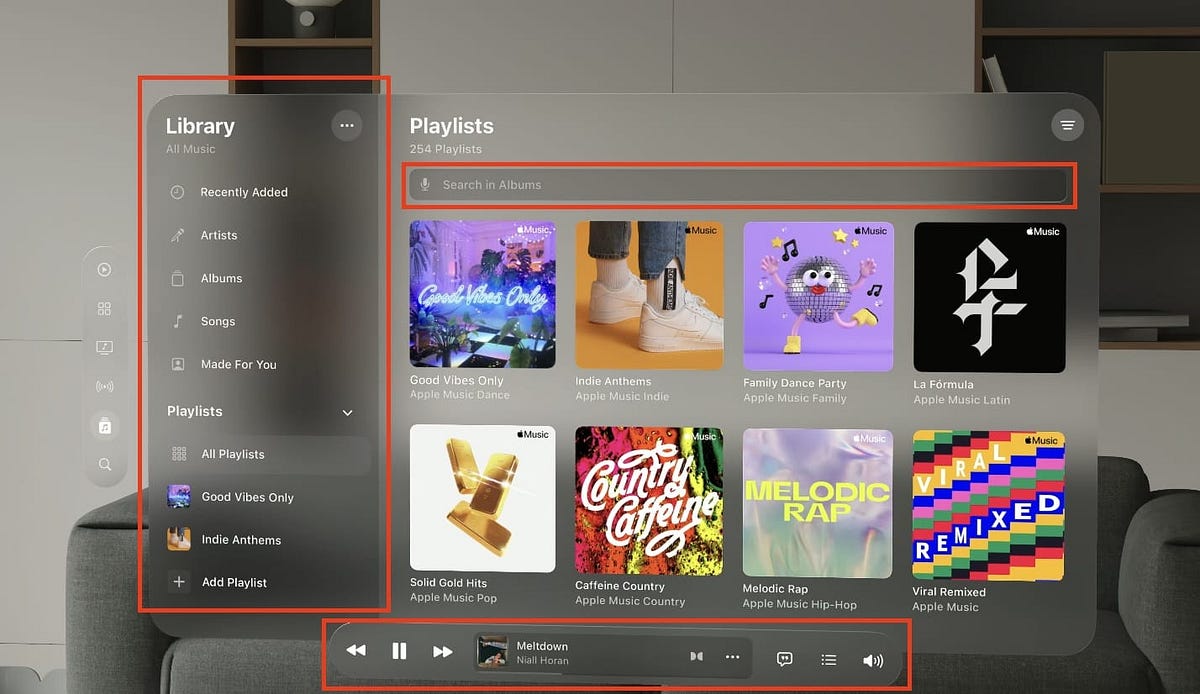
Glassmorphism emphasises transparency, depth, and a layered approach to UI design with frosted-glass effects and elements that appear suspended in mid-air, creating visual magic. What began as a design experiment has evolved into a sophisticated visual language embraced by tech giants and adopted across platforms, from mobile apps to spatial computing interfaces.
Apple’s introduction of its Liquid Glass design system has supercharged this trend, demonstrating what’s possible when translucent depth, refraction, and motion are all handled in real-time. Unlike the flat minimalism that dominated previous years, glassmorphism brings back visual warmth and dimensionality without requiring heavy 3D rendering or complex graphics.

4. Micro-Interactions Future UI Design
In an age of shrinking attention spans, Micro-interactions in UX have emerged as one of the most prominent future UX design strategies. This signals a shift from subtle or flashy animations to purposeful Motion UI, including character-filled moments that inject brand personality into every tap, swipe, and hover. The underlying goal is to reduce the cognitive load for users by guiding them through their digital journeys via features and interactive data visualisations.
Examples:
- Playful loading animations that entertain users
- Contextual success states that celebrate user achievements
- Error messages with helpful, human-friendly guidance
- Transition animations that maintain spatial relationships
Design principle: Every interaction is an opportunity to reinforce brand identity and delight users without slowing them down.

5. Asymmetric and Broken Grid Layouts
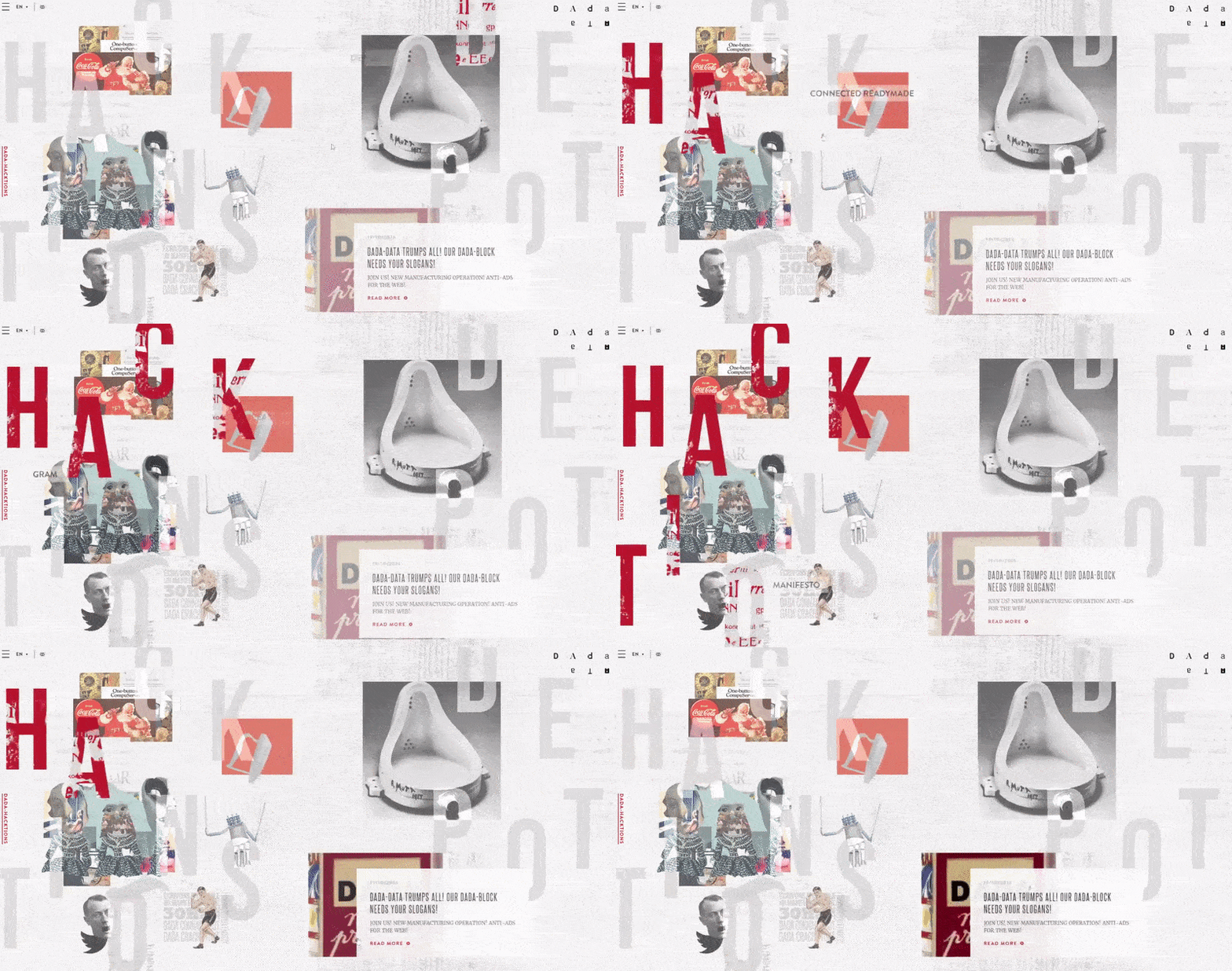
Traditional grid systems are paving the way for asymmetric layouts. That arouse visual interest while maintaining core functionality. While classic design conventions emphasized symmetry, modern trends are tilted towards unorthodox layouts that offer unlimited possibilities for breaking free from the constraints of grids. It aims to introduce a sense of chaos in rigid underlying structures to create dynamic and free-flowing designs.
Characteristics:
- Overlapping elements that create depth
- Irregular spacing that guides attention
Asymmetry must serve a purpose in guiding users through content hierarchy and not just be a form of aesthetic experimentation.
6. Dynamic Minimalism in UX Future
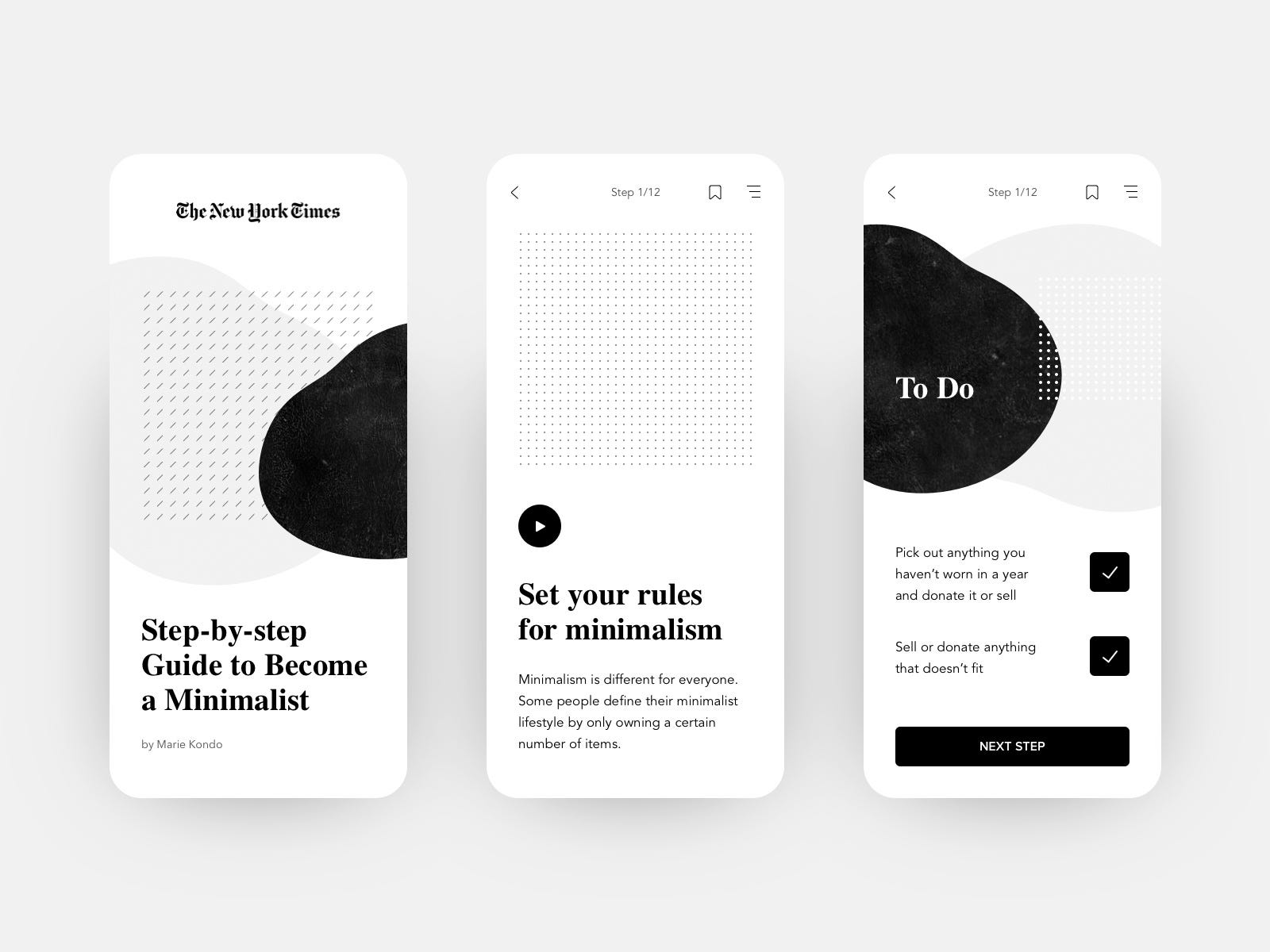
Minimalism is evolving to feel more dynamic and engaging through microinteractions, strategic colour pops that guide attention, and subtle motion that adds personality without overwhelming users.
Gone are the days when minimalism meant sterile white spaces and emotionless layouts. In 2025, minimalism with personality uses distinctive elements like asymmetrical layouts, strategically placed colour splashes, and playful microinteractions while maintaining core principles of clarity, functionality, and avoiding unnecessary elements.
This evolution recognises that users don’t just need functional interfaces—they crave experiences that feel human, memorable, and emotionally engaging. Dynamic minimalism delivers on both fronts: the efficiency users expect, with the personality that keeps them coming back.
7. Immersive Experiences in Design
Augmented and virtual reality are setting new standards in user experience, especially in retail and collaboration tools. This is evident in the increasing integration of 3d Based design with these technologies that create hyper-realistic 3D visuals to keep users engaged. However, graphic elements cannot simply be thrown in rapidly and should ideally be optimized to maintain loading speed.
Immersive designs work particularly well for creative apps, children’s products, and brands seeking approachable aesthetics.
8. Sustainable and Energy-efficient Designs
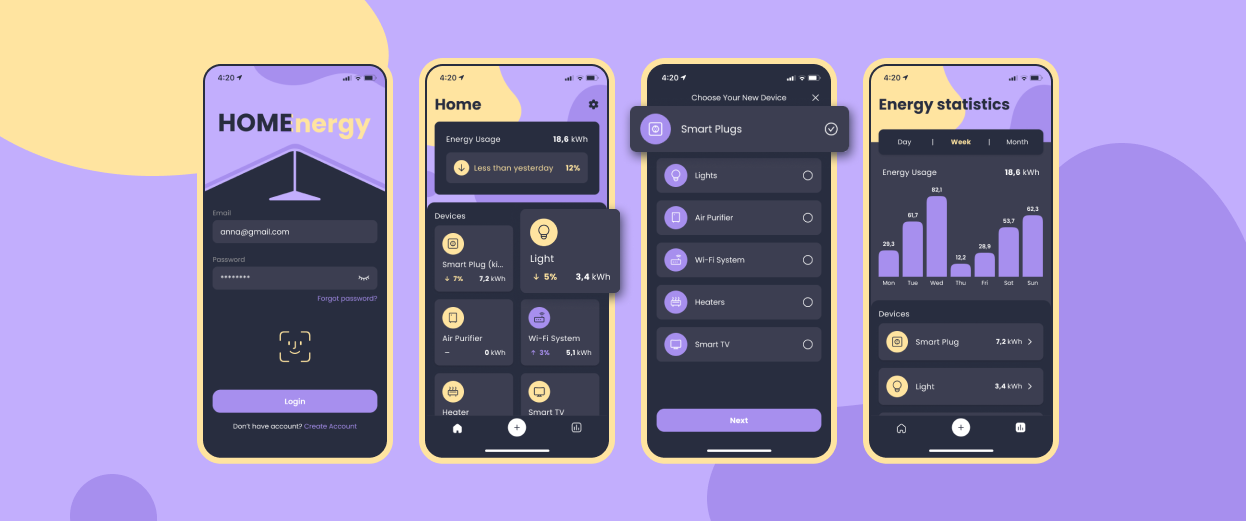
After having won advocates in the corporate world, sustainability is making waves in the design world. Designers are increasingly focusing on eco-friendly digital products that seamlessly blend sustainability principles with core design features to minimise heavy graphics or unnecessary animations that use more data and drain battery life.
Another aspect of eco-conscious designs involves optimising code to create fast-loading websites and using dark colour palettes to save energy.
This UI UX trend aims to contribute to a healthier planet in subtle ways, especially through promoting simplified design structures that reduce server load and carbon emissions.
9. Zero-UI Trend: The Rise of Invisible Interfaces
By 2028, 70% of customer service journeys will begin and be resolved through conversational, third-party AI assistants integrated into mobile devices. We’re not approaching the screenless future—we’re already living in its early stages.
Zero UI is a design approach where the interface fades into the background, with interactions becoming so seamless and intuitive that users barely notice any interface at all. Rather than clicking buttons or navigating menus, users simply speak, gesture, or let technology anticipate their needs based on context. When you ask Alexa to play music or adjust your thermostat, you’re having a one-on-one conversation with technology, not simply navigating through apps and menus.
Unlike traditional UIs, Zero UI agents don’t rely on users to click, scroll, or navigate; instead, they respond to spoken prompts, behavioural signals, external stimuli, and predictive cues. By doing so, they help compress long multi-step journeys into single exchanges.
10. Cross-Platform Consistency with Native Flexibility
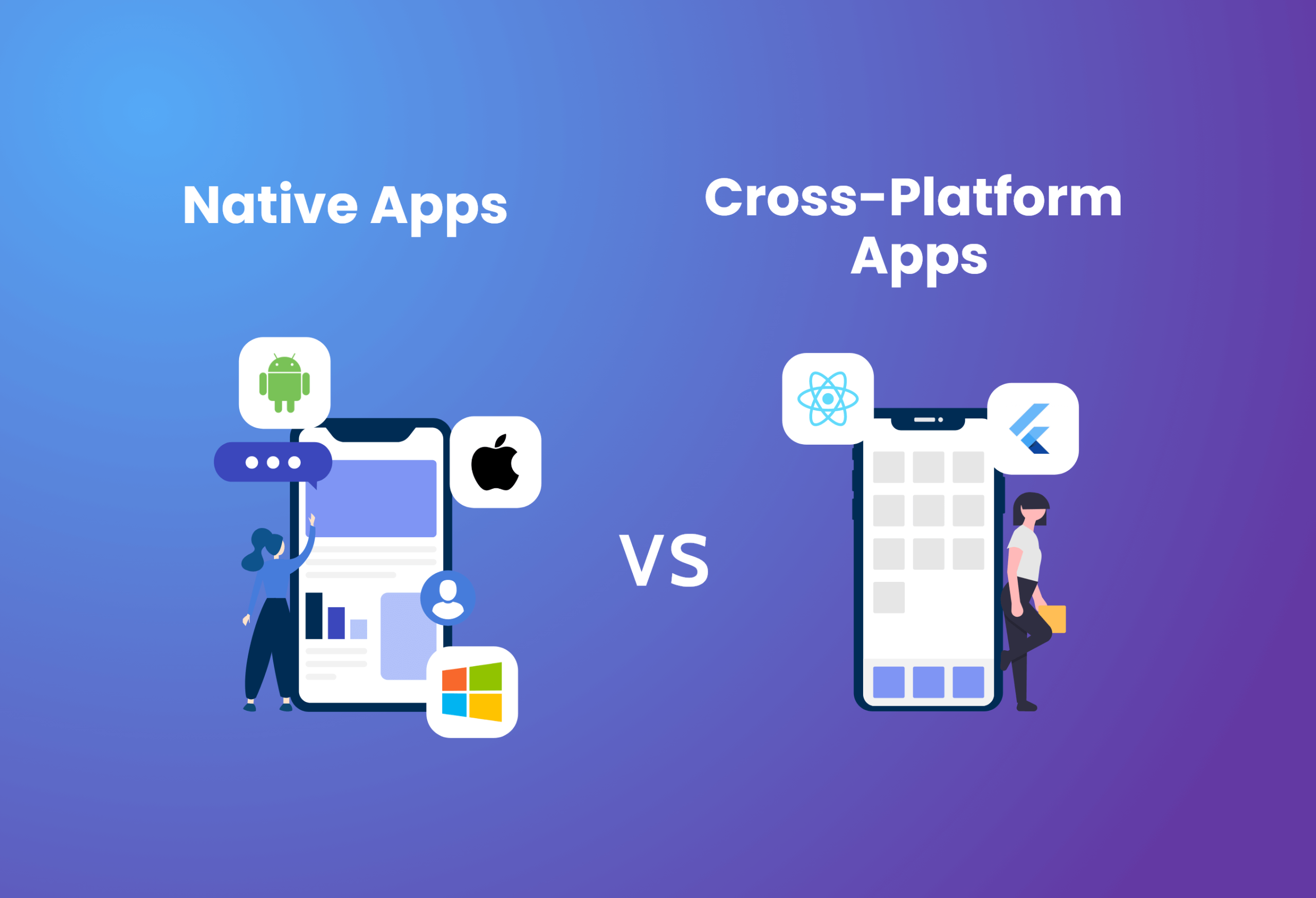
Modern users move flexibly between devices, and therefore, designs need to maintain this consistency too while adhering to platform-specific conventions and capabilities. A cross-platform UI design makes this possible by adopting a shared design language for iOS and Android devices.
This yields a responsive layout that is well-optimised for each screen size to allow users to experience a native-like interactivity on each platform. The design philosophy should aim to incorporate features that make your brand instantly recognisable to your audience without impacting responsiveness.
11. Design Systems 2.0
Understanding how design systems will evolve in 2026 is crucial, as design teams now expect far more than basic component libraries. These unified design systems function as all-in-one ecosystems encompassing accessibility guidelines, motion principles, content strategy, and cross-platform patterns.
Popular open-design design systems like Material Design, Ant Design, and Fluent Design System offer comprehensive design frameworks that maintain consistency at scale while accelerating the development of new digital products. This further ensures that brands deliver cohesive user experiences across all touchpoints.

12. More Gradients, Less Texture
One of the most defining trends in visual design evolution is the rise of smooth, sophisticated gradients. This marks a major shift from the flat design era, mainly due to the big tech influence, mainly represented by Microsoft’s Fluent Design System and Apple’s macOS Big Sur.
Microsoft’s Fluent Design System introduced translucent surfaces with subtle gradient overlays that create depth while maintaining clarity, while Apple launched vibrant, dimensional icon designs featuring rich gradient treatments.
Gradients add dimensionality to interfaces without requiring complex 3D rendering or heavy graphics. They create a sense of perceived depth using colour alone. Colour transitions have an emotionally evocative effect while helping brands stand out with modern aesthetics.

13. Mixed Reality (MR) Experiences
Mixed Reality (MR) is fundamentally changing how users interact with digital content by seamlessly merging physical and digital worlds into a unified experience. As one of the most exciting UX UI trends of 2025. MR enables bidirectional interaction where digital objects respond to real-world environments
MR has found application in multiple industries, from virtual try-ons in the retail sector with precise body measurements and fabric physics to brands visualising products at exact scale in their actual spaces.
For designers, following mixed reality interface guidelines demands an entirely new design language. Traditional rectangular screens give way to 360-degree spatial canvases where UI elements exist as objects in three-dimensional space. Interaction paradigms shift from clicks and taps to natural gestures, eye tracking, and voice commands, while the Information hierarchy manipulates literal distance from the user as a real design variable.
14. Cursors Reimagined
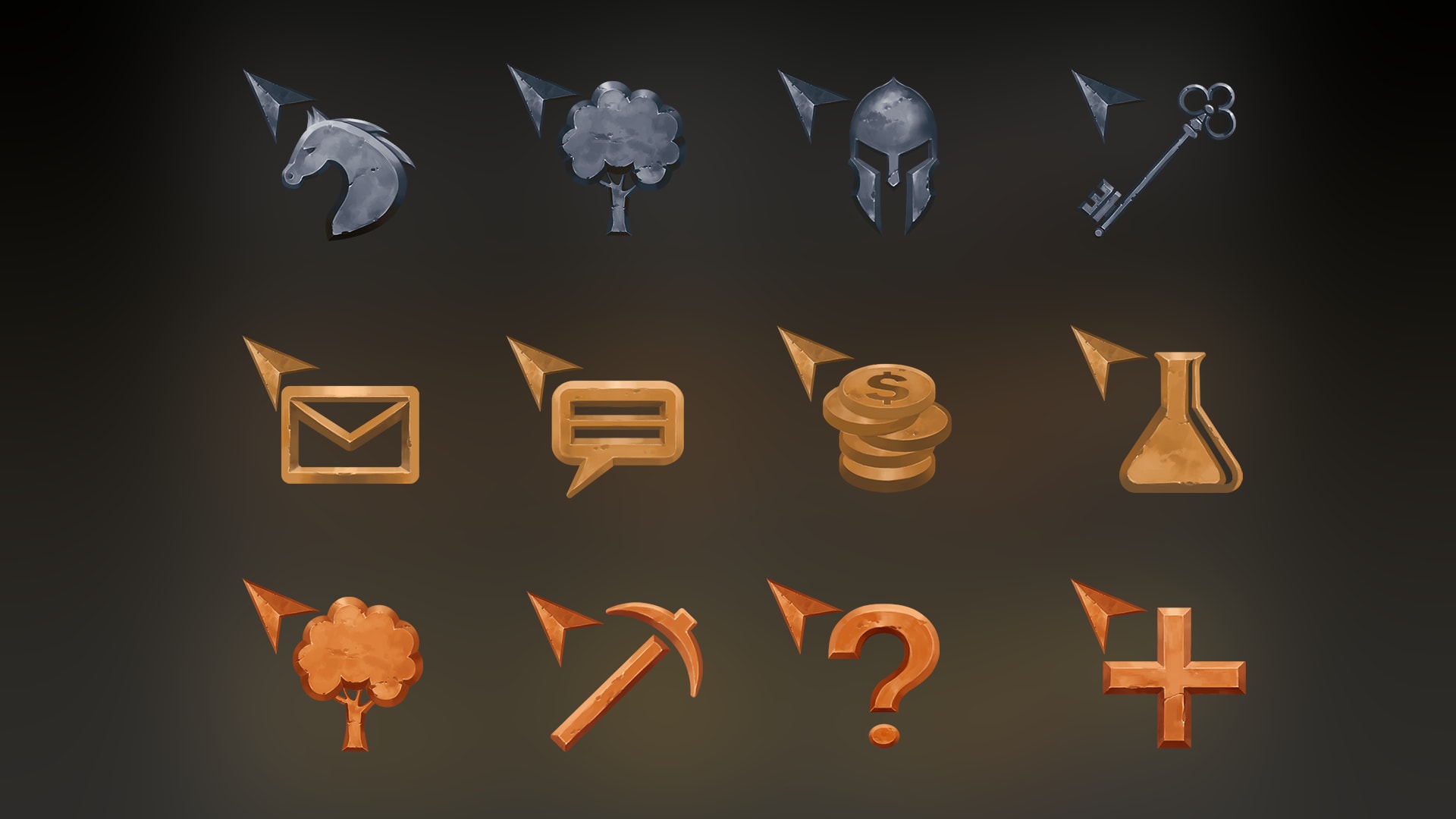
By 2026, sophisticated cursor interactions are evolving into a potent, albeit subtle, trend in UI design, transforming it from a mere pointer into an engaging interactive element. Envision cursors that fluidly alter their form, hue, or even initiate animations as they pass over interactive components.
Already, certain websites employ dynamic cursors that expand, transform, or respond to user gestures, fostering a more immersive browsing journey. In the realm of data-intensive applications like dashboards, intelligent cursors can deliver contextual tooltips, instant previews, and immediate feedback. This can render intricate interfaces remarkably more intuitive and responsive.
15. Surrealism in Product Photography
The era of clean, sterile product shots against white backgrounds is fading. Modern audiences don’t just want to see products—they want to feel something, and this is aptly reflected in yet another modern UX/UI trend: surreal photography. It’s no longer about displaying product specifications but adding the unexpected—surreal, dreamlike imagery that disrupts scrolling and demands a second look.
Brands are embracing products conveyed through visual stories; sneakers floating in cosmic nebulae, handbags melting like Salvador Dalí paintings, or watches suspended in anti-gravity environments with distorted perspectives. This helps brands create a visible impact by creating memorable brand moments and sparking conversations, hence building emotional connections.

Implementing These Trends: A Strategic Approach
While these Modern interface design trends offer exciting possibilities, blindly following every trend doesn’t guarantee ui/ux success. Consider these factors when deciding which to adopt:
- Brand alignment: Does the trend reinforce your brand identity, or does it feel forced?
- User needs: Will this trend genuinely improve the user experience, or is it purely aesthetic?
- Technical feasibility: Do you have the resources to implement and maintain this trend?
- Longevity: Is this a lasting shift or a passing fad? Future-proof your designs accordingly.
- Accessibility: Does the trend maintain or improve accessibility for all users?
The Common Thread: Intentional Design
Despite their diversity, UI design predictions for 2026 are embedded in a common principle: every design decision should serve a purpose. Whether it’s AI personalisation improving relevance, dark mode reducing eye strain, or inclusive design expanding accessibility, the future of UI UX design will be dominated by trends that solve real problems while creating delightful user-centred digital experiences.
As we progress through 2025, successful designers will be those who thoughtfully blend 2025 design trends with timeless UX principles—clarity, consistency, and user-centricity. By learning how to implement modern UI trends, designers will be well-equipped to add value, captivate users, and secure their success in a competitive digital landscape.