Drive More Sales with Expert eCommerce Strategies
In the competitive world of online retail, e-commerce marketing plays a crucial role in driving traffic and increasing sales. Whether launching a new store or optimizing an existing one, mastering eCommerce SEO, PPC advertising, and web design can make all the difference. In this guide, we’ll break down key strategies to maximize your store’s potential.
1. eCommerce SEO: Ranking Your Store for Maximum Visibility
Search engines are the gateway to online sales. Optimizing your eCommerce website for SEO ensures higher rankings, increased organic traffic, and better conversion rates. Here’s how to achieve it:
Keyword Research & Optimization
Using the right keywords is the foundation of a successful eCommerce SEO strategy. Implement long-tail keywords such as:
- Best Shopify SEO services for small businesses
- How to optimize product pages for e-commerce
- Effective on-page SEO strategies for eCommerce websites
Technical SEO & Site Structure
Ensure fast loading times, mobile responsiveness, and a user-friendly structure. Key improvements include:
- Implementing structured data for product pages to enhance search visibility.
- Fixing duplicate content issues to improve e-commerce search rankings.
- Enhancing Shopify web design for a seamless user experience.
2. eCommerce PPC: Maximizing Paid Advertising ROI
While SEO builds long-term growth, eCommerce PPC advertising delivers instant traffic. A well-executed PPC campaign can significantly boost sales through Google Ads, Bing Ads, and social media advertising.
Google Shopping Ads Optimization
To drive conversions, ensure your campaigns are optimized for:
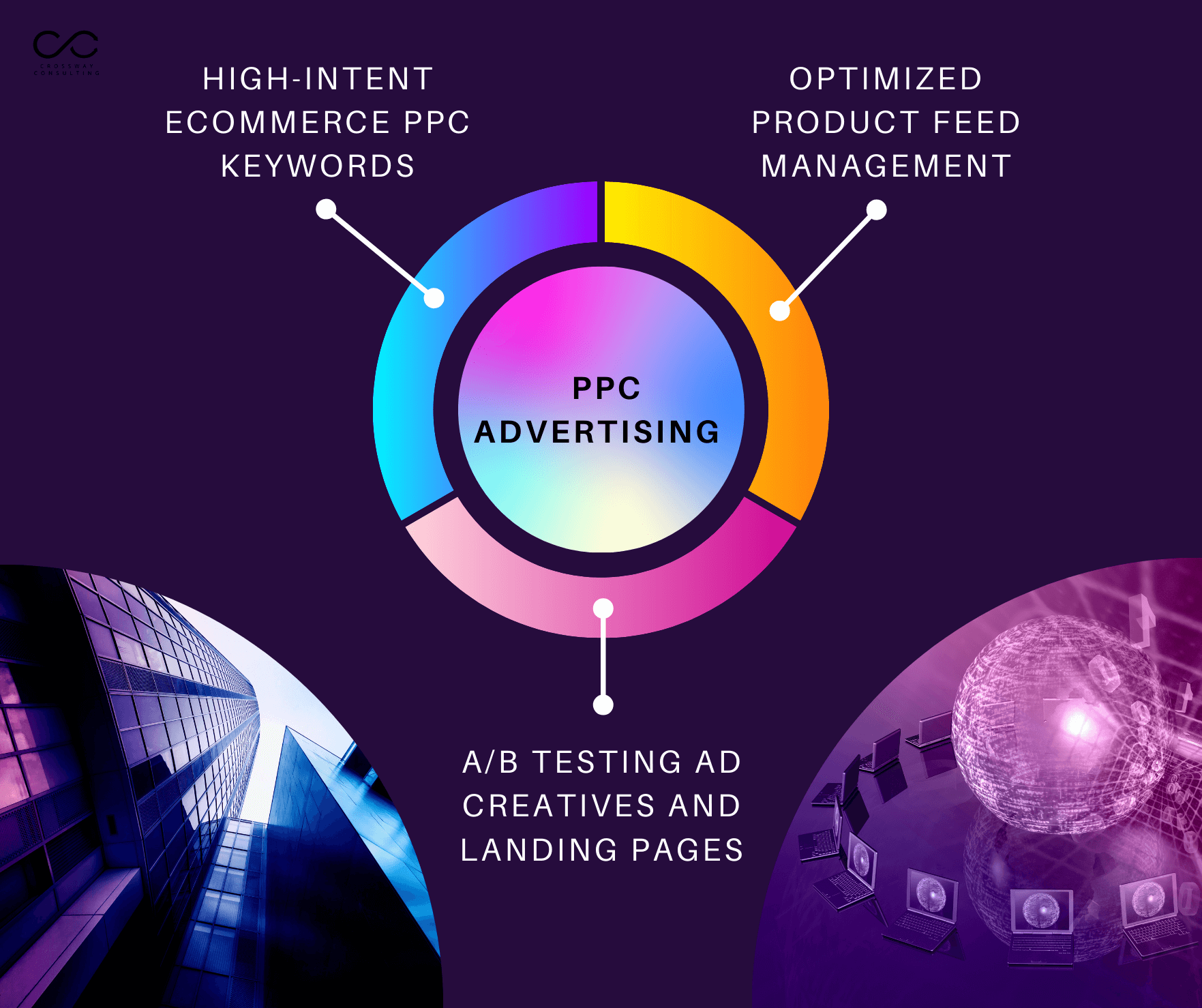
- High-intent eCommerce PPC keywords like “buy [product] online now.”
- Optimized product feed management for better visibility on Google Shopping.
- A/B testing ad creatives and landing pages to maximize return on investment.
3. eCommerce Web Design: Creating a Seamless Shopping Experience
An optimized website is critical for converting visitors into customers. Whether you’re using Shopify web design or a custom-built store, follow these best practices:
User Experience & Mobile Optimization
- Implement mobile-first design to cater to smartphone users.
- Use fast-loading themes and optimized images to enhance performance.
- Ensure intuitive navigation and clear CTAs to improve user engagement.
Conversion Rate Optimization (CRO)
- Leverage A/B testing to determine which design elements drive the highest conversions.
- Use trust signals like reviews and secure checkout options to increase credibility.
Optimize product descriptions with SEO-friendly content to attract search traffic.
4. Shopify SEO: Optimizing Your Store for Growth
For Shopify users, Shopify SEO is essential for visibility and rankings. Key areas to focus on:
Optimized Product Pages
- Use long-tail product keywords like “best waterproof hiking backpack under $100” to capture niche search queries.
- Implement high-quality images with alt text to improve accessibility and SEO.
- Optimize meta titles and descriptions with compelling CTAs.
Link Building for Shopify Stores
- Guest post on industry-relevant sites to gain authoritative backlinks for eCommerce websites.
Create internal links using related product categories and blog content (e.g., linking “best Shopify web design practices” to a Shopify service page).
5. eCommerce Optimization: Scaling Your Business
Beyond SEO and PPC, ongoing eCommerce optimization ensures sustainable growth.
Advanced Optimization Strategies
- Use AI-powered chatbots to enhance customer experience.
- Implement retargeting campaigns to bring back lost visitors.
- Optimize email marketing automation to increase repeat purchases.
Get Expert eCommerce Solutions Today!
At Crossway Consulting, we specialize in eCommerce marketing, SEO, and PPC strategies that drive results. Whether you need Shopify SEO services, eCommerce web design, or conversion rate optimization, we’re here to help! Contact Us Today & Boost Your Online Sales!